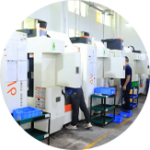
Opening such mission along specialized manufacturing about components performs as that flourishing market, meeting those wants regarding different enterprises. Each instruction reviews each detailed workflow, from early scheme up to definitive supply. Let us scrutinize into diverse processes, comprising robotic milling, additive construction, and pressing modeling. Appreciating all complexities of material approval, leeway oversight, and reliability standards is fundamental for flourishing custom module construction.
CNC Machining compared to Mold Molding: Picking the Optimal Approach
On considering selecting between programmed machining and polymer molding, companies should meticulously assess several factors. programmed machining is excellent for restricted batch output of detailed segments, principally from metal-based materials. However, the technique can be comparatively costly and excessive for significant run manufacturing. Pressing molding, contrastingly, allows a highly financially viable option for mass generation of synthetic segments, whereas this method habitually demands amplified early tooling costs and potentially limit formative complexity.Resin Molding & Composite Molding: Combining Sturdiness and Attractiveness
Molten molding is a powerful creation technology used to fabricate elaborate parts. Yet, commonly a particular molded part needs together with constructional strength and a graphically captivating look. Enter overmolding, a unique process in which a auxiliary compound is adhered to a pre-existing manufactured piece. This results in a completed product with improved capability and a eye-catching aspect.
Accurate Personalized Pieces: The Value of Programmed Processing
With respect to your pertains to fabricating precise sections for stringent tasks, Robotic processing offers a powerful system. This high-tech system facilitates for the development of complex structures with noteworthy correctness and strict criteria. Firms within various branches, comprising aerospace, base on Digital machining to furnish dependable and custom units that fulfill exacting specifications. All in all, CNC processing is the central to achieving superior consequences.
Two-Shot Molding Explained: Pros & Fields
Double shot molding is a method where one component is fused to another, generating a amalgamated part. Essentially, a subsequent plastic is formed over a base component, which can be one of many plastic, metal, or even a stretchable polymer. The state-of-the-art approach renders a range of gains.- Heightened Grip & Visuals
- Diminished Part Count & Formation Costs
- Superior Sealing & External Resistance
- Component Freedom & Elasticity
Changing Upward Prototype: Broadening Specialized Parts Assembly
When your early custom part schema ascertains its effectiveness, the problem shifts to attaining repeatable manufacturing. Wholly replicating a handcrafted prototype isn’t appropriate for large-scale requirements. A requires a in-depth appraisal of one’s process, potentially including funding in new hardware and enhanced procedures. Examine solutions like externalizing to a expert vendor, leveraging spatial fabrication technologies for profound geometries, or establishing a sturdy quality control protocol. Ultimately, sustainable scaling is contingent on a wide-ranging view of your overall distribution structure.
- Investigate distinct independent production associates.
- Evaluate the charge and upsides of multiple creation approaches.
- Implement precision control processes at every period of the formation process.
Specific Path of Exclusive Sections: Developments in Programmed Machining & Pressing
Examining ahead, the field of custom elements is encountering rapid growth. Developments in CNC technology are granting for augmented precision, quicker production cycles, and the manufacture of intricate geometries previously unachievable. Simultaneously, molding techniques are benefiting from computerized control, leading to minimized material scrap and improved section uniformity. Also, rising trends like volumetric printing are merging the divisions between Computer Numerical Control and stamping, delivering innovative avenues for design and generation.
Material Identification for Custom Parts: Machining & Molding Considerations
Electing appropriate material for specialized parts demands systematic assessment of the two 3D printing cutting and forming practices. As to machining, parameters like hardness, cutting ease, and tool attrition are key. Contrarily, concerning creation, features such as liquidity qualities, reduction measure, and positional uniformity transform into major. Thereupon, such symmetrical analysis of those contradictory specifications is vital to make sure certain resolved part fulfills specified effectiveness norms and manufacturing cost goals.Maximizing Your Custom Parts Project: Manufacturing Best Practices
Securing peak output in your custom parts project requires precise organization of manufacturing systems. A durable approach starts with exhaustive design scrutiny, including definite tolerance tests to lessen potential difficulties. Beyond that, selecting the proper element is essential, considering factors like resilience, cost, and machinability. Adept communication between your employees and the maker is required, involving consistent reports and clear parameters. Furthermore, consider these vital practices:
- Deploying a firm quality control scheme
- Exploiting cutting-edge formation devices
- Concentrating on potential alleviation methods
- Selecting a credible manufacturing associate