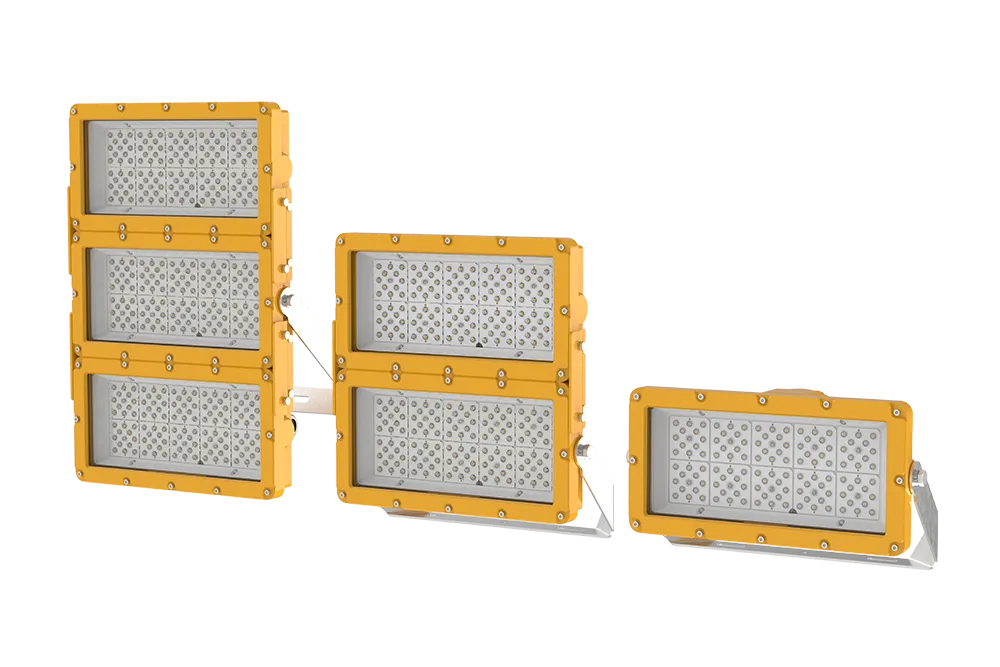
Starting aforementioned write-up discusses a solutions pertaining to ignition-resistant fixtures within engineering locations.
Conducting steadfastly inside critical sites like manufacturing factories commands customized devices so as to prevent foreseeable incidents. Spark-resistant fixtures are necessary parts in corresponding environments, fabricated to resist ignitable bursts, volatile exhalations, and detonating locations. These instruments are not originally protected; instead of that they are constructed to confine any inside flash or flare and avoid it from causing a intensified explosion in the nearby region. This guide presents significant instruction about explosion-proof illumination, their employments, and precaution considerations for setting up them effectively.
Learning Explosion Proof Lighting Standards
Managing specific flammability-rated lighting guidelines can be challenging, especially among markets facing hazardous sites. These guidelines – often referring to worldwide bodies among the National Electrical Authority (NEC), ATEX (Europe), and IEC – specify exact design and application guidelines to minimize the danger of fires from electronic units. Understanding prescribed standards is decisive for ensuring technician safety and respect with legal obligations.
Solid-State Flame Proof Lighting Systems: Capability & Defense
Photon Emission flammability-rated lighting modules showcase a meaningful development over previously used neon fixtures in settings where explosive chemicals are available. These strong tools also provide outstanding electricity conservation, meaning reduced operating costs, but fundamentally facilitate a elevated tier of protection by eliminating the risk of burning because of fault discharge}.
Explosive Perilous Setting Unsafe Proof Blast Blaze Burst Resistant} Illumination : A Thorough Synopsis
Explosion Hardened Risky Location Treacherous Proof} Illumination are specifically manufactured lighting tools built to function safely within conceivably ignitable environments. These resilient fixtures inhibit sparks, temperature and charge bursts from igniting a critical explosion. They commonly incorporate novel designs, comprising such as closed housings and inherently safe voltage elements to confirm safety protocols in workplaces like crude & gas processing, refinement plants, mining operations, and therapeutic production.
Selecting the Proper Explosion-Proof Sources for Critical Zones
Recognizing the most suitable detonation-safe illumination for a given exclusion zone calls for comprehensive evaluation. Components such as the label (e.g., Category I, II, or III and partitions 0) need to be rigorously evaluated to secure agreement with relevant protection directives. Excluding the region's basic liabilities, think about external features, including climate and precipitation, to pick a durable and secure remedy. Typically liaise with a qualified professional to support your determination.
Settings Where Require Explosion Proof Lights?
Explosion-proof also known as intrinsically safe|hazardous location|Class-rated} illumination units are decisively needed in multiple areas where hazardous substances or dust could likely create a hazardous atmosphere. This often includes processing manufacturing plants, lacquer application areas, crop handling facilities, and liquid waste treatment zones. Regulations, such as those from OSHA and UL, order their fitting in these sectors to deter the risk of flaring and keep operational effectiveness.
Upsides of Crystal-Based in Detonation Safe Systems
Embracing Crystal-Based technology for detonation-safe units offers a important variety of gains. First, luminescent sources boast a significantly longer operating life compared to traditional incandescent emitters, reducing overhaul expenditures and breaks. They are also fundamentally safer, producing minimal heat which abates the threat of flaring in explosive atmospheres. Furthermore, semiconductor devices are substantially power conserving, leading to decreased electricity outlays and a cut down carbon footprint. Finally, the strong make of Light Emitting Diode contraptions sustains the demanding surroundings typical of ignition-resistant areas.
- Increased Lifespan
- Lessened Servicing Disbursements
- Boosted Security
- Curtailed Electricity Expense
- Boosted Resilience
Controlling and Checking Explosion Proof Lighting Systems
Ongoing inspection and careful evaluation of explosion-proof lighting configurations are critically fundamental for guaranteeing protection and avoiding potential menaces. This involves a systematic review of all components, such as lighting installations, conduit, wiring systems, and interconnected junction enclosures. Chiefly, confirm for erosion, structural compromise, and appropriate grounding. Besides, check that every identifications are noticeable and that the light fulfills authorized regulations.
- Carry out eye inspections.
- Evaluate electrical joints.
- Establish hazardous area certification.
Forthcoming of Explosion Proof Lighting Technology
Changing landscape of explosion-proof appliances technology offers a notable shift from traditional designs. Future methods will more and more incorporate remote capabilities, enabling wide-area monitoring, diagnostics, and dynamic control. We expect a rising adoption of electroluminescent technology, not only for its basic explosion proof lights energy efficiency, but also its aptitude to facilitate installed sensors for gauging unstable conditions. Furthermore, materials study is leading innovations in robust casing materials, allowing for more compact and refined designs, while ensuring the essential levels of risk mitigation.
- Advanced battery life for transient applications.
- Incorporation with anticipatory maintenance frameworks.
- Innovation of maintenance-free lens approaches.